
What If 10 Minutes a Month Could Help You Ask Better Retirement Questions?
What If 10 Minutes a Month Could Help You Ask Better Retirement Questions?
Retirement Readiness: Why One Better Question Each Month Could Make a Difference
For many Americans approaching retirement, the biggest challenge isn't always finding more information. It's knowing which questions to ask—and when to ask them.
Retirement involves more than savings balances, investment accounts, or choosing a retirement date. It also involves understanding income, taxes, healthcare costs, financial risks, and the decisions that may affect your family.
But here's a question worth exploring:
What if just 10 minutes a month could help you become more informed and better prepared for important retirement conversations?
Imagine setting aside a few minutes each month to explore one important retirement topic, consider one meaningful question, and better understand the choices that may lie ahead.
You don't have to figure everything out at once. And you don't have to become a financial expert.
Sometimes, retirement readiness begins with something much simpler: asking better questions, one month at a time.
That's the idea behind the Retirement Growth Unlocked™ educational approach and the 2027 Retirement Readiness Calendar.
10 MINUTES. ONE TOPIC. ONE BETTER QUESTION. EVERY MONTH.
Why Retirement Readiness Deserves More Than a Once-a-Year Conversation
For many people, retirement planning happens only occasionally—perhaps during an annual financial review, a conversation about a 401(k), or when an important financial decision needs to be made.
But retirement readiness involves many interconnected questions that can change as your circumstances evolve.
Consider how much can influence your financial future: inflation, healthcare expenses, taxes, retirement income, market uncertainty, family responsibilities, and the possibility of living 20 or 30 years in retirement.
Trying to understand everything at once can feel overwhelming.
What if retirement education became a simple monthly habit instead of another complicated task on your to-do list?
That's where a different approach can make sense.
Rather than attempting to address every retirement topic in one sitting, imagine focusing on just one important subject each month.
One month, you might explore how much of your savings should remain accessible.
Another month, you might consider how taxes could affect your retirement income.
And another month, you might ask how your financial decisions could affect your spouse, children, or future legacy.
Each topic creates an opportunity to learn something useful, identify questions worth discussing, and become more informed about the decisions ahead.
The goal isn't to make every financial decision in 10 minutes. It's to use those 10 minutes to ask a better question.
Over time, a consistent educational habit may help you approach retirement conversations with greater clarity and confidence.

Retirement Isn't Just One Question — And You Don't Have to Answer Everything at Once
One of the most important things to understand as retirement approaches is that retirement readiness involves more than one financial decision.
It's not simply about choosing a retirement date, checking your account balances, or determining how much money you've accumulated.
Retirement involves several important questions, and those questions may change as your circumstances, priorities, and financial needs evolve.
Questions About Retirement Income
Where might your retirement income come from?
For some people, retirement income may involve Social Security, pensions, personal savings, retirement accounts, or other financial arrangements.
Understanding which income sources may be available, when they may begin, and what limitations they may have is an important part of retirement readiness.
Questions About Taxes, Accessibility, and Protection
How might taxes affect the retirement income you eventually receive?
How much money may need to remain accessible for unexpected expenses?
What financial risks should you understand as you approach retirement?
And have you considered whether your beneficiary information and other important financial documents reflect your current wishes?
These questions involve different aspects of retirement readiness, but each deserves attention.
Questions About Your Family and Financial Future
Retirement decisions may also affect your spouse, children, beneficiaries, or other people who depend on you.
You might want to consider how your financial arrangements could affect your family, what information they may need, and which qualified professionals could help you explore important decisions.
The challenge is that trying to address every retirement question at once can feel overwhelming.
A Simpler Way to Begin: One Question at a Time
What if, instead of trying to figure out your entire retirement in one sitting, you set aside just 10 minutes each month to explore one important topic?
One month, you might ask a question about retirement income.
Another month, you might explore liquidity and emergency savings.
Another month, your focus might be beneficiaries, taxes, protection, or the reliability of income sources you may depend on.
You don't have to become a financial expert, and you don't have to make every decision immediately.
The purpose is to become more informed, recognize which questions deserve further attention, and prepare for more productive conversations when professional guidance may be appropriate.
The bigger idea is simple: Retirement isn't just one question, and you don't need every answer today. By exploring one important topic and asking one better question each month, you can begin building a more consistent retirement-readiness habit.

Why Retirement Readiness Involves More Than Account Balances
When people think about preparing for retirement, it's natural to focus on savings, investment performance, and how much money they've accumulated.
But retirement readiness involves more than watching account balances. It also means understanding the questions that may influence your income, financial flexibility, family priorities, and future decisions.
That's why a simple monthly educational habit can be valuable. Rather than trying to understand every retirement topic at once, you can focus on one meaningful question each month.
Consider the kinds of questions worth exploring:
How much money might need to remain accessible for unexpected expenses?
Which sources of retirement income may help cover essential living expenses?
How might inflation and rising costs affect purchasing power over time?
What should you understand about market uncertainty as retirement approaches?
How might your financial decisions affect a spouse, beneficiaries, or other family members?
Each question represents a different part of retirement readiness. And each could become the focus of a future 10-minute educational conversation.
One Month, One Topic, One Better Question
For example, one month you might explore liquidity and ask whether your emergency reserves are appropriate for your circumstances.
Another month, you might examine retirement income and consider which sources could be more predictable and which may be affected by market conditions.
A different month might focus on taxes, beneficiary information, or how your family could locate important financial documents.
You don't need to solve every issue during those 10 minutes. The purpose is to become more informed, identify what deserves additional attention, and prepare for conversations with qualified professionals when appropriate.
Over time, these small educational steps may help you develop a clearer understanding of your retirement priorities.
The bigger idea is simple: Retirement readiness isn't measured by account balances alone. By exploring one important topic and asking one better question each month, you can build a more consistent habit of preparing for retirement decisions.
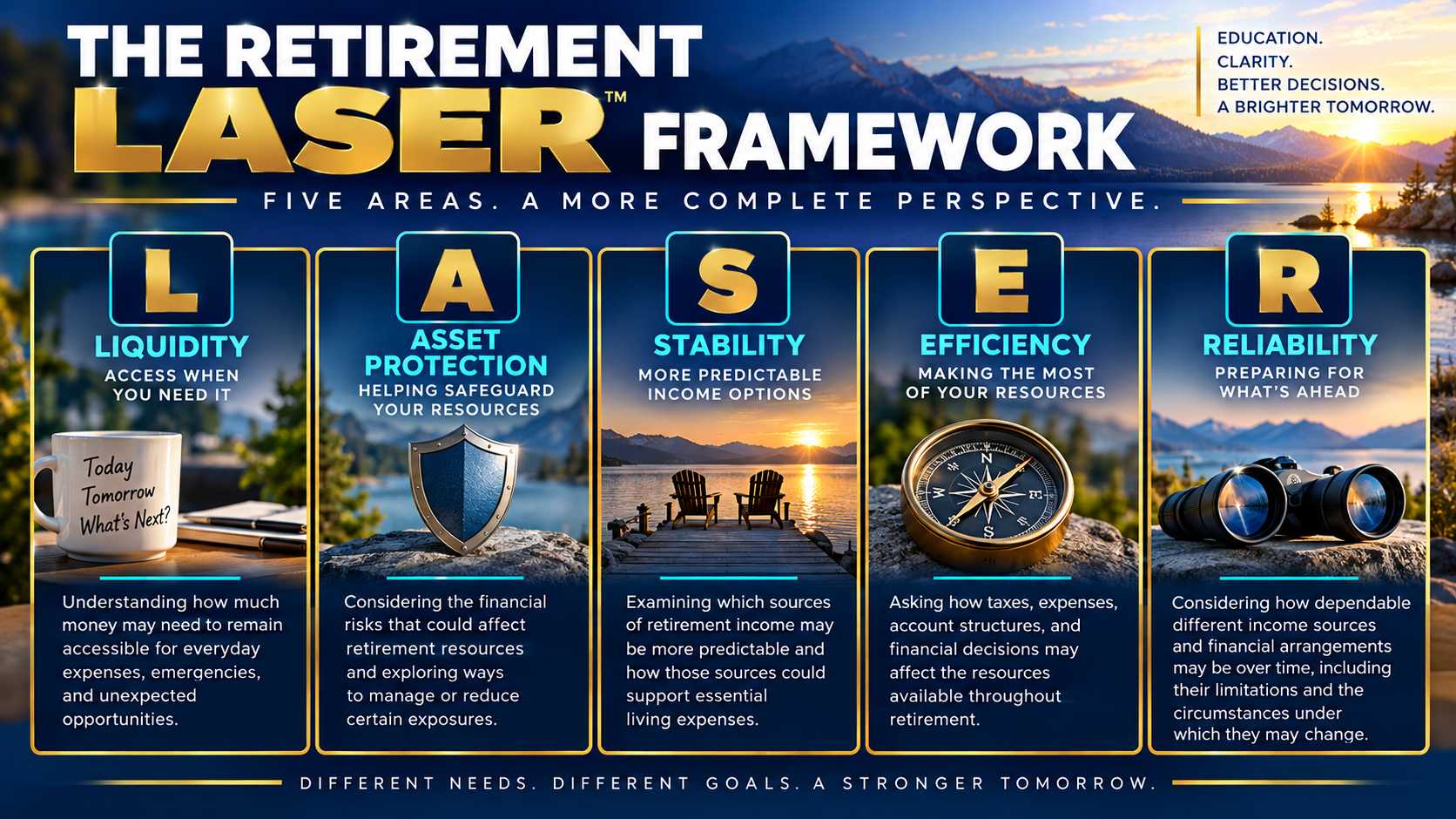
Looking at Retirement Through the Retirement LASER™ Framework
Asking one better retirement question each month becomes easier when you have a way to organize the topics you're exploring.
That's where the Retirement LASER™ educational framework can help.
Presented by Retirement Growth Unlocked™, LASER represents five important areas to consider as you explore retirement readiness.
L — Liquidity
How accessible are your financial resources when unexpected needs or opportunities arise?
Liquidity involves understanding which resources may be available for everyday expenses, emergencies, and changing circumstances.
A — Asset Protection
What financial risks could affect the resources you've worked to accumulate?
Asset Protection encourages you to explore potential risks and understand the different ways those risks may be managed or reduced.
S — Stability
Which sources of retirement income may provide greater predictability?
Stability involves considering how different income sources may support essential living expenses and what limitations or uncertainties may apply.
E — Efficiency
How might taxes, expenses, and financial decisions affect the resources available throughout retirement?
Efficiency encourages thoughtful questions about how different financial arrangements may influence your retirement resources.
R — Reliability
How dependable are the financial resources and income arrangements you may need over time?
Reliability involves understanding the conditions, limitations, and factors that could affect the resources you expect to depend on.
Five Areas. Different Questions. One Monthly Habit.
The Retirement LASER™ framework doesn't require you to explore every area at once.
One month, your educational topic might focus on Liquidity. Another month, you might explore Stability, Efficiency, or one of the other LASER™ areas.
Each topic provides an opportunity to ask a better question, understand an important consideration, and recognize when additional professional guidance may be appropriate.
Retirement LASER™ is an educational framework, not a financial product or a guarantee of retirement results.
The goal isn't to make every retirement decision in 10 minutes. It's to use one topic and one better question each month to develop a more informed understanding of your retirement readiness.
What Could 10 Minutes a Month Look Like?
Retirement readiness doesn't have to begin with a long list of financial decisions. Sometimes, a more manageable starting point is setting aside a few minutes to explore one meaningful question.
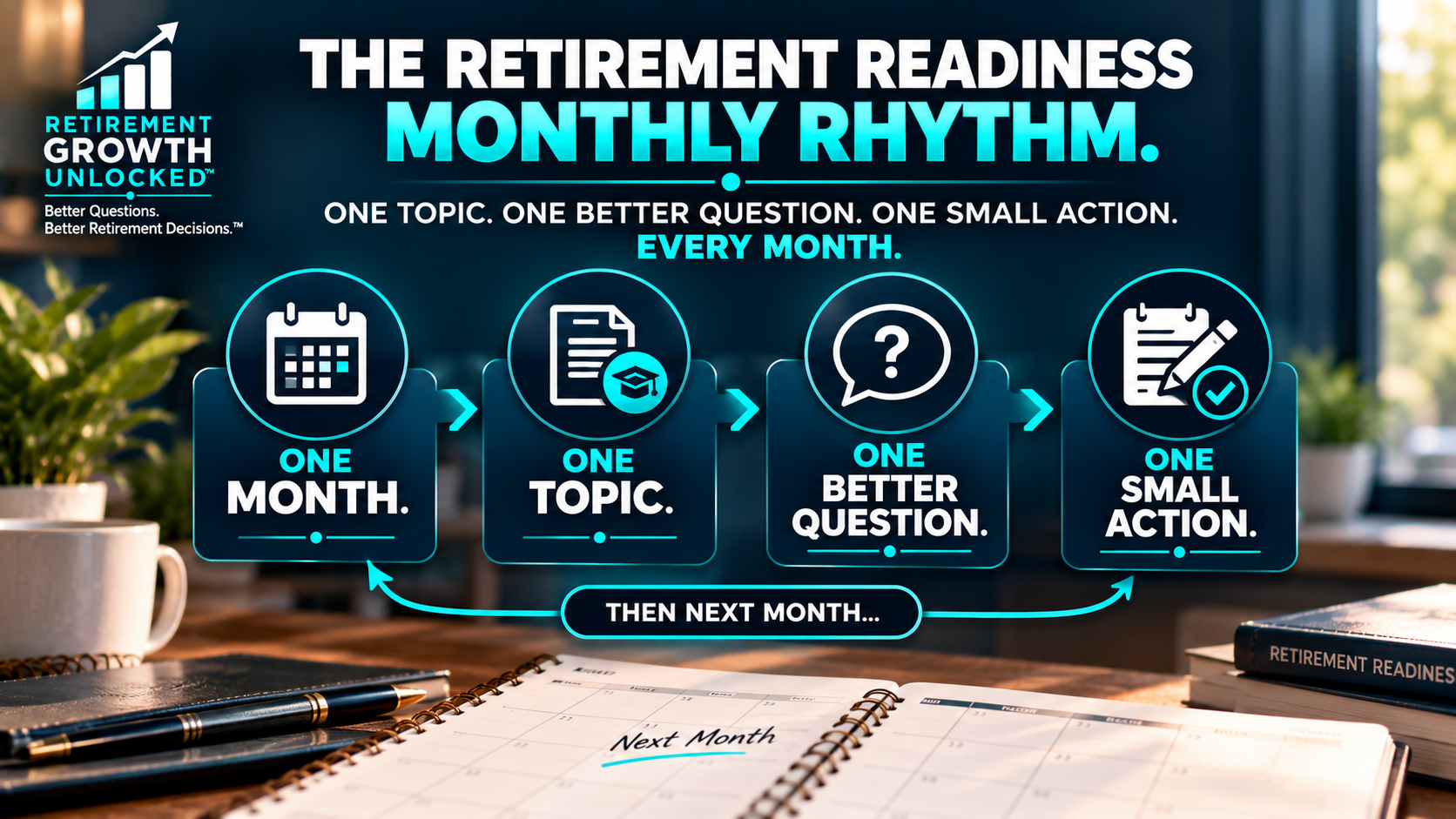
The idea behind the Retirement Readiness Calendar is simple: one month, one topic, one better question, and one small action.
For example, one month you might explore retirement income and identify a question about the sources you expect to depend on.
Another month, you might focus on liquidity and consider whether you've reviewed your access to money for unexpected expenses.
A different month could introduce questions about taxes, beneficiaries, or important information your family may need.
Each monthly topic provides an opportunity to learn, reflect, and recognize when a conversation with a qualified professional may be helpful.
Ten minutes won't answer every retirement question. But making time for one important question each month can help you develop a more consistent educational habit.
Your Next Step: Keep Asking Better Retirement Questions
You've just explored a simple idea: retirement readiness doesn't have to begin with trying to answer every financial question at once.
By setting aside a few minutes each month, you can begin exploring important topics, identifying questions worth asking, and becoming better prepared for conversations about your financial future.
The Retirement LASER™ framework offers five educational areas to help organize those conversations: Liquidity, Asset Protection, Stability, Efficiency, and Reliability.
The goal isn't to make every retirement decision in 10 minutes. It's to make time for one better question each month.
Explore Our Free Retirement Readiness Workshop
Want to explore these ideas further before deciding what to do next?
Our free Retirement Readiness Workshop introduces important retirement topics through practical, education-first conversations.
You'll explore questions about retirement income, financial flexibility, potential risks, and the decisions that may affect you and your family.
Whether you're preparing for retirement or already retired, the workshop is designed to help you become more informed—not to pressure you into purchasing a financial product.
Explore the Free Retirement Readiness Workshop
Continue Learning With the 2027 Retirement Readiness Calendar
12 Months. 12 Better Questions. One More Informed Retirement.
For those who would like to build a consistent monthly educational habit, the 2027 Retirement Readiness Calendar offers a simple way to continue learning throughout the year.
Each month focuses on one retirement-readiness topic and one better question to explore.
Your membership includes a monthly digital calendar, an approximately 10-minute educational audio lesson, a printable worksheet, and access to your member resource library.
Founding Membership: $7 for your first month, then $17 per month. Cancel anytime.
Active founding members retain their $17 monthly rate while their memberships remain continuously active.
An annual prepaid option is also available at $149 for 12 months.
Participation is optional. The free workshop and paid membership are separate educational experiences.
Explore the 2027 Retirement Readiness Calendar
Important Educational Disclosure
This article, accompanying video, and related Retirement Growth Unlocked™ educational materials are provided for general informational and educational purposes only.
They are not intended to provide individualized investment, financial, tax, or legal advice, nor do they constitute a recommendation to purchase or replace any financial or insurance product.
Investments involve risk, including possible loss of principal. Insurance-based financial products may involve fees, surrender charges, limitations, and other considerations. Any contractual guarantees depend on the terms of the issuing insurance company and its financial strength and claims-paying ability.
The Retirement LASER™ framework is an educational tool for organizing retirement-readiness questions and does not guarantee financial outcomes.
Before making financial decisions, consider consulting appropriately licensed or qualified professionals regarding your individual circumstances.